[Unless Said Otherwise] Spoiler Alert: This summary and review contains spoilers.
Additionally, some images and text may include affiliate links, meaning we may earn a commission or receive products if you make a purchase.
“Take Me Home” Film Details
- Runtime: 1 Hour(s) and 30 Minutes
- Seen Via: Film Festival – Tribeca Film Festival [See More Of Our 2026 Coverage]
- Public Release Date: June 6, 2026
- Director(s): Liz Sargent
- Writer(s): Liz Sargent
- Primary Language: English
- Genre(s): Comedy, Drama
- Rating: Not Rated
Movie Summary
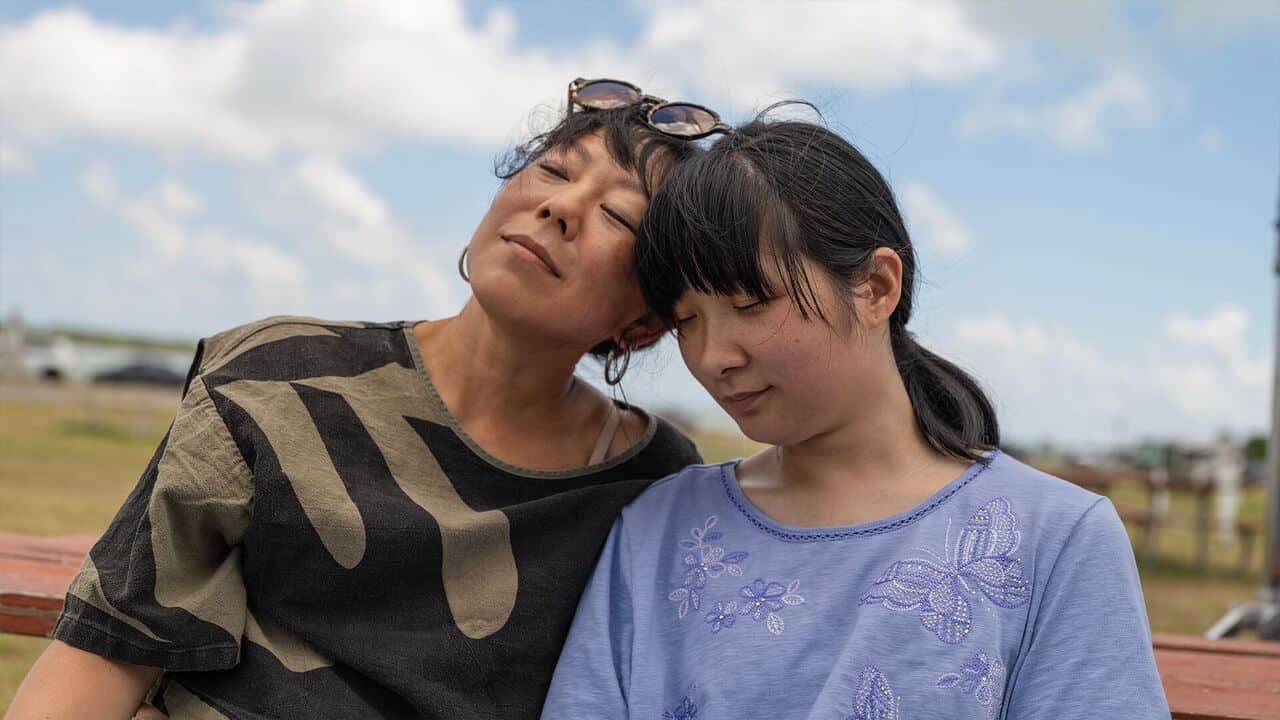
Anna is an autistic adult living with her adoptive parents in Orlando, Florida. She has a younger sister, Emily, who lives in New York and seemingly left mainly due to being unable to deal with everything it takes to be around her family.
Note, she loves them, but between Anna, their dad Bob, and even their mom sometimes, it is a lot. Sadly, what allowed Emily to leave recently has been removed, making their delicate family begin to fall apart.
Cast and Characters
Anna (Anna Sargent)
- Character Summary: Anna is a young woman with autism who, in Emily’s eyes, is capable of so much more, but because she is being babied, she is stunted.
Bob (Victor Slezak)
- Character Summary: Bob is Emily and Anna’s dad, who is getting older, showing signs of some neurological disorder, but is too proud to admit it and afraid of what his absence would mean for Anna.
Emily (Ali Ahn)
- Character Summary: Emily is Anna’s little sister, who moved to New York. She is seemingly doing well but struggling with her family guilt.
Mom (Marceline Hugot)
- Character Summary: Mom is the tie that binds the family, but she struggles as much as the others. But without her, everything will unravel.
James (Shane Harper)
- Character Summary: James is Anna’s neighbor with whom she hangs out, as her parents begin to really get on her nerves.
Review and Commentary
Highlight(s)
Anna Allowed Notable Complexity [86/100]
Similar to Wildflower, Take Me Home shows all sides of not only being someone who is autistic but also the experience of being part of their family. Anna is an adult. One who is 38, verbal, can read to a point, and has social skills, but it is made clear that her parents, while they mean well, have limited her.
Her mother bathes her, dad enables her tantrums, and only Emily really seems to see how capable she is. Case in point, Anna knows right from wrong, but does know how to steal to get what she wants. It’s sometimes as if only Emily sees Anna for who she can be rather than the limited scope of what her diagnosis implies.
Heck, take note of the neighbor James. He is one of the clear examples of how a lot of people in the disabled community are truly only limited by who is in their environment. He plays basketball with her, sees if she is into drinking, and hangs out.
Together, it truly shows that, as loving as parents can be, their love can enable the worst in you or be at your own detriment.
Understanding The System Is Meant To Be Available But Tough To Use [83/100]
Taking place in Florida, the film makes sure not to be political, but makes it clear how limited services can be. Anna’s parents are aging and just as much need assistance as she does. But Medicaid, Medicare, and all of those systems aren’t simple to navigate. They are made to be hard to keep you from using the money.
Never mind, not every place takes them because it requires them to be able to navigate the same pain-in-the-ass system. It all puts you in the place of frustration and being in need, but at the same time, struggling because the viable options are like a dangling carrot, always out of reach.
How the film plays this out, I wouldn’t say is in depth, but it does coerce you to understand the undertaking of Anna’s parents, never mind why the father’s fears are valid, specifically, about what happens when he can no longer take care of his family.
On The Fence
A Time Jump Which Skips Over Difficult Parts [73/100]
Eventually, s*** hits the fan. The problem is, as a viewer, you get to see things get to rock bottom, but the recovery is done rather quickly. It takes away from the journey a bit since you don’t get to see the rebuild.
You get to know how bad things got and then suddenly, in a snap, they are better to the point you are almost left wondering if you are witnessing an ideal, a dream, or the afterlife.
Side Note
How Isolated Was This Family?
It isn’t clear how long Anna’s family lived in the area, but I feel like with the way Anna is, surely the neighbors knew about her, looked out for her, and didn’t just listen, watch, and whisper amongst themselves. I bring this up because there are many moments in the movie you’d think someone would have checked in, even James, but that doesn’t happen.
Overall
Our Rating (80/100): Positive (Worth Seeing)
While a neat and ideal ending does take away from the journey, to a point, there is no denying that this take on the experience of being someone with autism joins the ranks of Atypical, Wildflower, The Good Doctor, and so many other productions. For what it makes clear is that autism is a spectrum, and oftentimes, the capabilities of the individual aren’t limited by their diagnosis, but by how much their family and community will push them and aid them to see how far they can go.
What To Check Out Next
-
First Half of 2026: Recommended Movies & Shorts
Thus far, we have seen over 100 films or shorts, and these are the ones from the first half of 2026 we believe you should watch.
-
She’s Non-Binary (2026) – Review and Summary
Everyone claims to be an ally until it is inconvenient.
-
You Tryna Say You Love Me? (2026) – Review and Summary | Tribeca Film Festival
A first date goes beyond the superficial as intentions are made clear in You Tryna Say You Love Me?

Images used for editorial and commentary purposes. All rights remain with their respective copyright holders.