Spoiler Alert: This summary and review contains spoilers.
Additionally, some images and text may include affiliate links, meaning we may earn a commission or receive products if you make a purchase.
“Stand Up” Film Details
- Director(s): Mari Sanders
- Writer(s): Mari Sanders
- Runtime: 1 Hour(s) and 35 Minutes
- Public Release Date (Film Festival – Tribeca Film Festival [More Coverage Of The 2026 Film Festival]): June 6, 2026
- Genre(s): Drama, Young Adult
- Content Rating: Not Rated
- Primary Language: English | Non-English (Dutch)
- Images © of / Courtesy Of Alibi Communications
Movie Summary
For Vera’s 23-some odd years, the world was her oyster. Whether it was attractive guys, going everywhere or anywhere with their friends, traveling, it was all easy. One accident, though, with her being hit by a truck, changes everything drastically. Leading to a lot of the privileges Vera had being gone overnight, and her having to not just adjust to a new way of getting around, but having a life.
Cast and Characters
Vera (Lucia Zemene)
- Character Summary: Vera is a 23-year-old young woman who isn’t necessarily set on any given path in life. She didn’t go to college to become something; she isn’t necessarily talented in something particular that can become a career. She is still very much discovering herself and just barely picking up on what she likes and would consider consistently enjoyable things to do.
Xander (Daan Buringa)
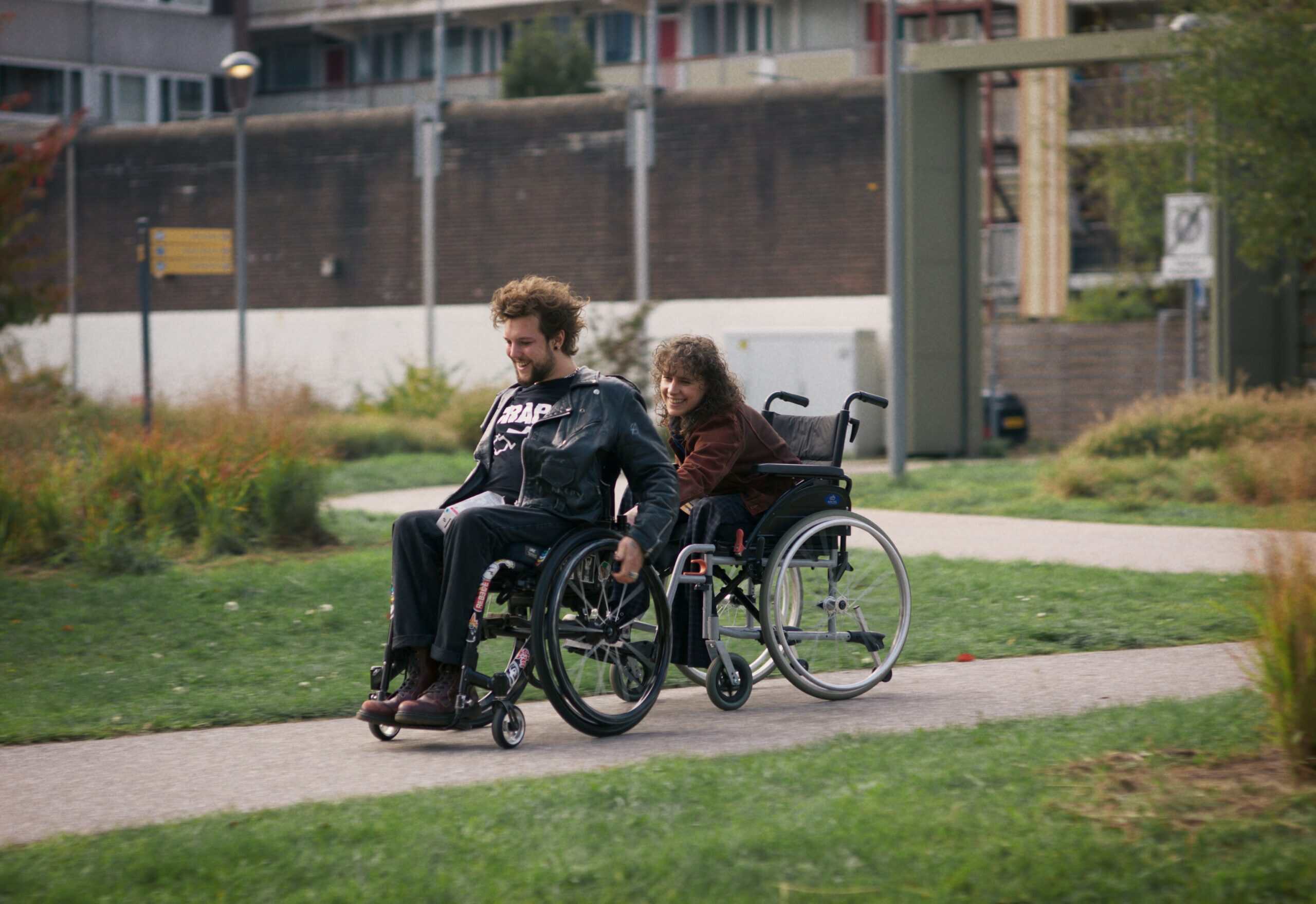
- Character Summary: Xander is a young man who is disabled, a wheelchair user specifically, who has dreams of becoming a stand-up comedian. After all, he is the funniest in his group, surely could compete for most charismatic, but sometimes it is like speaking to the great and powerful Oz, and the man behind the curtain isn’t as big a personality.
Inaya (Hana Hussein)
- Character Summary: Inaya is Vera’s best friend and perhaps one of the few who truly make the effort required to allow Vera to reintroduce herself.
Review and Commentary
Highlight(s)
Adapting To A World Not Made For You [86/100]
It shouldn’t be lost on anyone that the further removed you are from being a “Normie,” the more challenging the world can get. Being deaf removes many of the warnings society has; a lot of architecture is made to be pretty, maybe provide security, but it isn’t necessarily friendly to those who are blind. Then, for wheelchair users, it is a whole new ordeal.
In the movie, they give a good example of how creative you may have to get when an elevator is broken and the only alternative is an escalator. Not the fancy kind that can make one step into a platform, but the kind you would see at any mall, the nicer subways, or even the airport.
Heck, even things for all people, like going to the beach, isn’t as easy, for whether you have a motorized wheelchair or one you turn by hand – how do you navigate sand to get to the water?
The Struggle Of Dealing With Other People’s Reactions [85/100]
But one of the ventricles that makes the heart of the film is not so much Vera dealing with losing part of her leg, but the reaction. The physical change you see, she is scrappy enough to deal with, for the most part, but how her friends change, how guys look at her, and the world? Stand Up gives you something different.
Generally speaking, when introduced to characters like Vera, they are already someone with a disability. Either since birth, or long before they are introduced to us. In addition, regarding age, it usually exists in extremes. They are either high school-aged or younger, still dependent on their parents, or well into their adult years. Vera is in her early 20s and was still in a chapter of her life where she was discovering herself. That makes suddenly being forced to live differently mind-boggling.
But it isn’t just her, but those around her. As seen in real life or any production focused on someone who isn’t neurotypical or non-disabled, most don’t know how to act around someone who is different. There is either an aversion or trying to do too much, to the point of being condescending or infantilizing.
We see this in Stand Up. Vera’s original friend group doesn’t know how to navigate things past the initial grief of what Vera lost. One friend, Inaya, does the work, but it is shown to be just that. You have to learn when to step in and when not to, understand, if you want to help, how to break down a wheelchair so it can fit in a car, and have a bit more initiative, grace, patience, and understanding. For Vera isn’t a saint. She has her moods, can be an ass, and that was before she needed a wheelchair. So now, with additional factors to complicate her life, you have to allow for a whole new depth to the relationship for the empathy that is required.
Which, as you can imagine, makes dating hell. Especially since Vera is not the relationship type. She likes to hook up, get off, and gets as mad as anyone else when someone is charming and cute, but doesn’t know what they are doing. Thus giving us so many aspects beyond the usual to take note of.
How Your Relationship With Your Body Changes [84/100]
I should note, though, as much as Vera is adaptable, that doesn’t mean she is just suddenly fine with losing half of her leg. It creates a disconnect for her, what she calls a phantom pain, and as noted above regarding the social changes, it makes her look and feel different in her body.
Note, Vera used to love cycling fast and dangerously. She was someone who enjoyed sex, dancing, and also intimacy with her friends. Now she has to look at her leg, the scarring and how they formed the end of it, and figure out how she feels about it. What can, if anything, be done? Should she do the surgery and work toward a prosthetic leg? What about the cost since there are multiple kinds?
Stand Up looks at Vera’s life change from every angle and her journey is like a form of puberty. Where everything that’s old feels new, confusing, and creates a type of restlessness likely very few miss.
Xander and Vera’s Relationship [85.5/100]
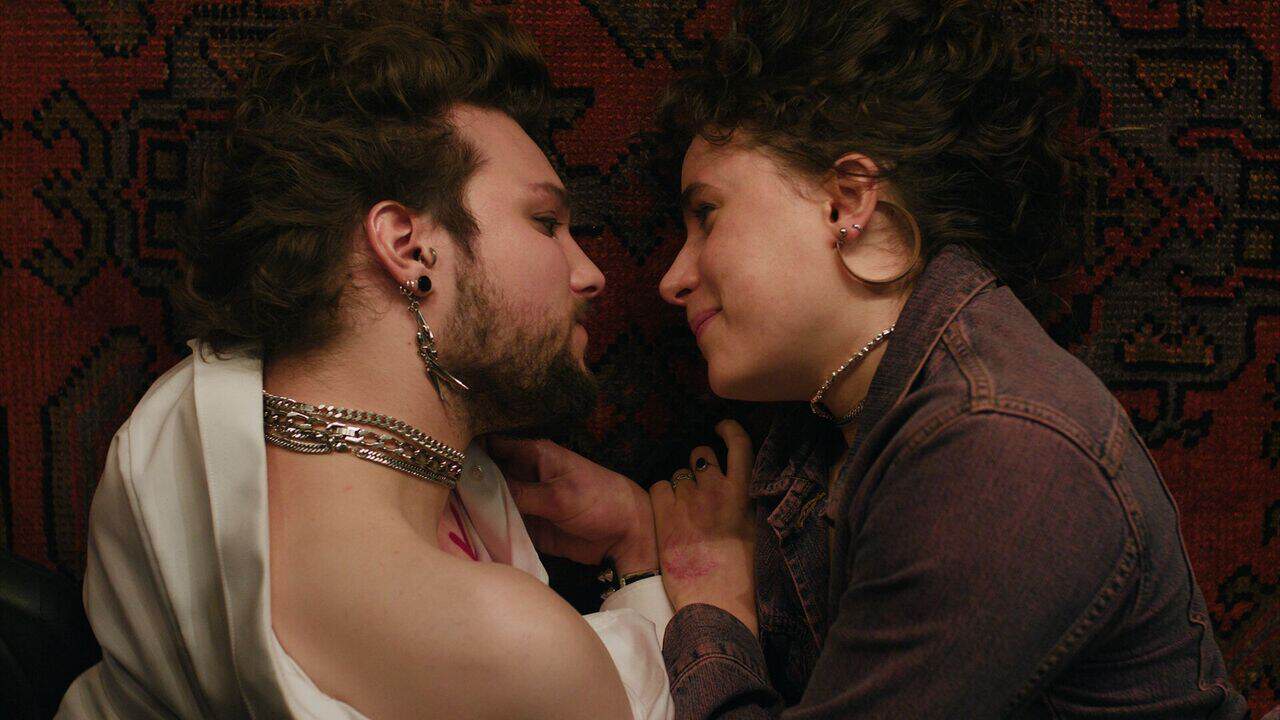
The beauty of Xander and Vera’s relationship is that, as much as he is her guide into the world of being disabled, he doesn’t lose himself in that role. Xander still is someone Vera wants to flip off as much as maybe cuddle with. He is someone perplexing, stuck in his way of life in Vera’s mind, but also he has figured out ways to live that Vera hasn’t yet – and sometimes needs to.
It creates a very rich dynamic that doesn’t fall into any trope, even as feelings begin to develop. For in many ways, you can see Xander may have shown up in Vera’s life at the right time, but rarely does it seem he is going to be some forever person for her – platonically or otherwise. For as Vera rediscovers herself, physically, mentally, and emotionally to a point, there is a need to start asking, while things have changed for her, does that mean she has changed? Xander might be ahead of her in being a wheelchair user, finding community, and learning how to live – but can she outgrow him?
The Idea You Don’t Need To Change The World, Just Better Your Own [83.5/100]
The other ventricle, which is a driving part of this film, is that, in many ways, your existence alone is advocacy and a rebellion. Xander and his friends sometimes enjoy good trouble, messing with normies who try to keep them out of the way or present them as inconvenient as they see the world.
Vera, while she likes a bit of mischief, doesn’t suddenly become an advocate because she is now in their position. She represents that rarely seen person who, yes, is different and has no means to deny or cover it up. But that doesn’t mean she wants to march the streets, take up space, and make a point. All Vera wants is enough accommodations to live her life, get a job, live on her own, and something about that creates one of the most relatable pieces in Stand Up.
Most of us don’t want to fight for housing, employment, or basic human dignity. We just want to present ourselves as we are, and if we need help, not having to feel guilty about it. Because, at the end of the day, it seems what Stand Up wants the most is not to become some political film about accessibility, opportunities, or anything like that. It just wants to show a person who, mostly, wants, has, and is working towards all that you are. It’s just that she is taking a different path to get there.
Overall
Our Rating (84/100): Positive (Worth Seeing)
Stand Up stands out because it makes an effort to figure out a way to avoid the trappings of many stories about disabled people. It doesn’t want Vera to be an inspiration, a hero, someone to put on a pedestal. Also, it doesn’t want her to be this sad character whom you pity, and dwell on the life she could have had. Stand Up wants you to understand how adaptable humanity is, and while some may have to get creative to have the life they want, that isn’t as out of the norm as you may think.
What To Check Out Next
Check out our movies page! There you’ll find our latest movie reviews and recommendations.
-
Rain Reign (2026) – Review and Summary | Tribeca Film Festival
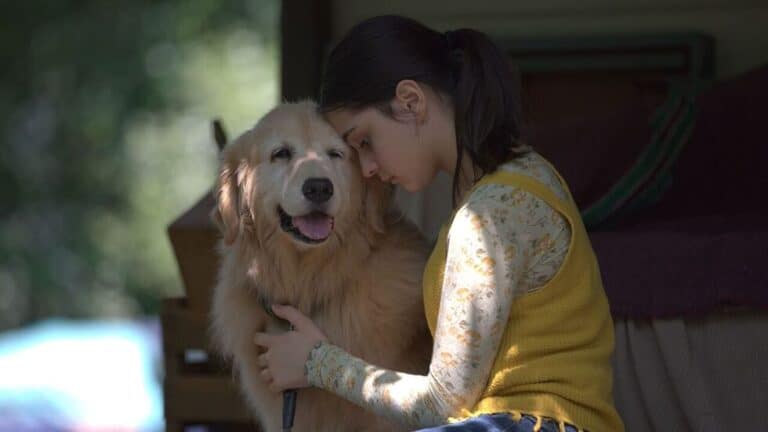
Felice Kakaletris, alongside Jeremy Sisto and Paul Rudd, produces a heart-warming, tear-jerking film that highlights the beauty of complicated family dynamics.
-
Verse (2026) – Review and Summary | Tribeca Film Festival
Can a fantasy made in VR ever match reality? Even in ideal conditions?
-
ChikaBOOM! (2026) – Review and Summary | Tribeca Film Festival
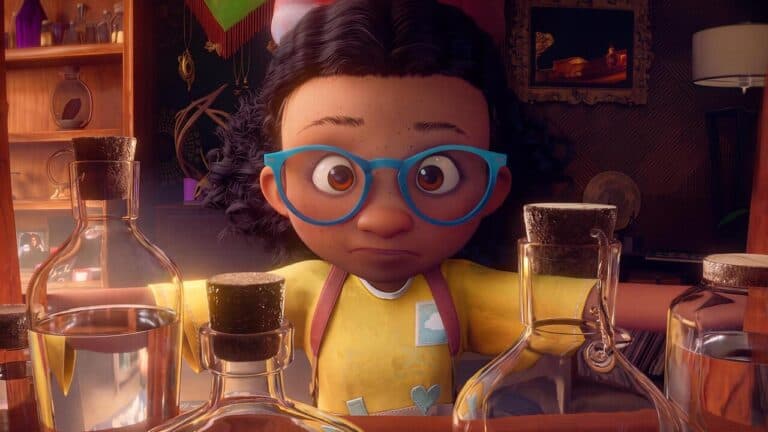
ChikaBOOM! is a reminder that maybe every piece of art, doesn’t need to have a deeper meaning.
Images used for editorial and commentary purposes. All rights remain with their respective copyright holders.